
Why the HR-Safety divide is one of the most preventable risks in your business
Page Published Date:
June 23, 2026

I've spent a long time working with safety professionals across Australia. One of the patterns I keep seeing, in businesses of all sizes across every sector, is the gap between the safety team and the people team. Both doing important work, but too often doing it separately.
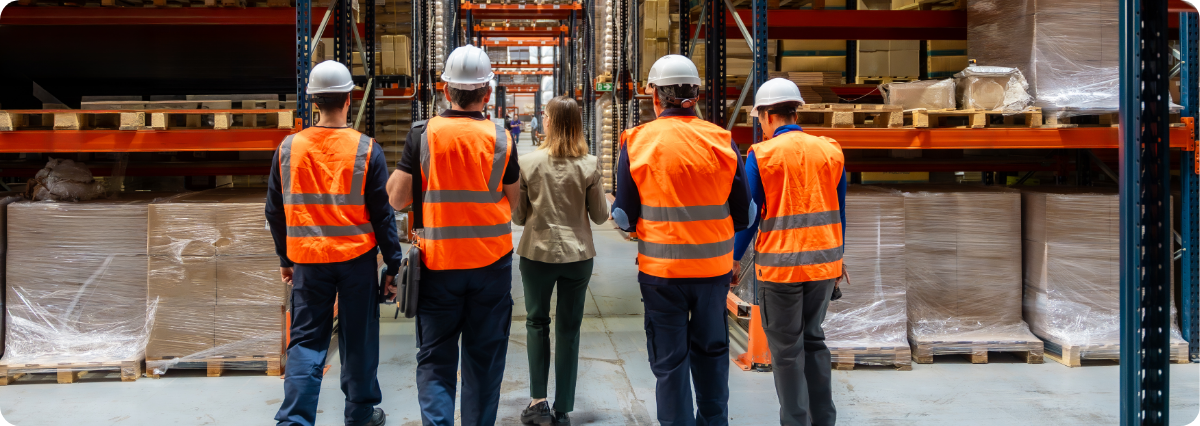
I was reminded of this recently by the themes at our recent expert panel discussion in Sydney. Some of Australia's most senior safety and HR leaders were in the room, and the conversation turned to what happens when these two functions operate in silos.
Jo Cairns, Chief People Officer at Team Global Express, was unambiguous.
"If people only worry about their own little silo, I guarantee you the human-centred approach will be missed.
People will fall through the cracks, because it will always be somebody else's responsibility."
Jo described TGE's model: people and safety co-design programs together. Both are jointly accountable to governance committees. There are dedicated forums specifically for keeping both functions aligned. That structure reflects a deliberate decision that these two functions are more effective working together than apart.
Why does it matter now more than ever?
From December 2025, every Australian jurisdiction requires employers to explicitly identify, assess, and control psychosocial hazards. The obligation sits formally within WHS but many of the controls — role design, workload management, change processes, leadership capability — sit within, or require collaboration with, HR.
In NSW, the SafeWork NSW Psychological Health and Safety Strategy 2024–2026 is explicit on the consequence of siloed functions: delays in risk identification, inconsistent responses, and gaps in psychosocial hazard management. Large employers are already subject to compliance visits and psychosocial WHS checks.
The legal stakes are also sharpening. In December 2024, the High Court awarded $1.44 million in damages to a former employee in the case of
Elisha v Vision Australia Ltd [2024] HCA 50, finding that a flawed and procedurally unfair disciplinary process had caused foreseeable psychiatric injury. The case set a significant precedent for employer liability where proper process protections are not followed.
What does good collaboration actually look like?
At PwC Australia, Danielle Odd, Director of Wellbeing, Health and Safety and Margherita Maini, Managing Director of Culture, Leadership and Talent sit within the same leadership team, reporting to the CPO. Danielle and Margherita described at the event how their psychosocial risk data and engagement survey data are now presented together. They have one narrative for the board.
"We are singing from the same hymn sheet. When you hear from either of us, you're hearing the same thing," Margherita affirmed.
This alignment matters in practice. When safety and HR are telling different stories to leadership, neither gets the traction it needs and risks fall between the functions.
What does poor collaboration cost?
Safe Work Australia's 2025 statistics show mental health conditions account for 12% of all serious workers' compensation claims, up 14.7% in a single year. Workers with a psychological injury are off work for an average of 35.7 weeks — almost five times longer than other serious injury claims. The median compensation is $65,400, significantly higher than for physical injuries.
Many of those claims trace back to psychosocial hazards that were likely visible somewhere in the organisation (in engagement surveys, turnover data, exit interviews or performance conversations) but were handled separately from what the safety function was monitoring. The two sets of information were there but never came together.
My challenge to safety professionals
When did you last sit down with your HR counterpart and look at the same data? When did you last jointly present to a leadership team? When did you last co-design a response to a risk that both functions could see?
Our partner firm, The Strategic Step Advisory, can help you think through what that collaboration looks like in practice. Get in touch with them here.
The Safe Step can help you find the people with the cross functional skills to succeed. Contact the team today.