
Less is More: Key Insights from the AIHS Annual OHS Breakfast in Melbourne
Page Published Date:
February 15, 2026

Reflections from Paul Bridgewater (Director, The Next Group Victoria) and Becka Brown (Recruitment Consultant, The Safe Step)
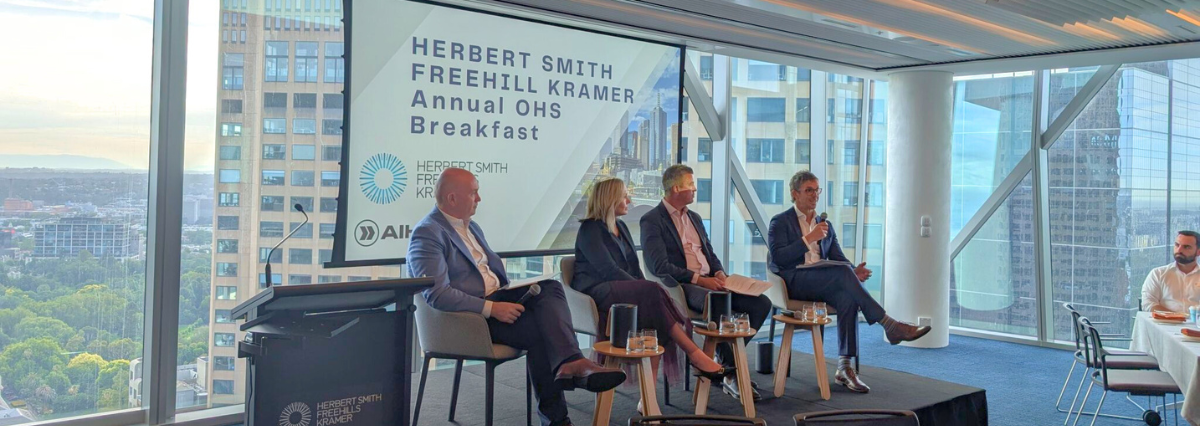
Last week, we attended an OHS breakfast hosted by AIHS and Herbert Smith Freehills Kramer in Melbourne. In an environment of heightened regulatory scrutiny and rising sanctions, the conversation focused on what actually moves the dial in safety leadership.
From Data-Rich to Insight-Driven
Paul: Nicola Davies, GM Enterprise Health, Safety & Wellbeing at AusPost, shared a compelling story that resonated deeply. After an internal audit identified 189 safety-related data points, they made the bold decision to pare this down to just seven due diligence-aligned metrics.
Becka: As Nicki put it, "We're data rich but insight poor." Despite all those metrics, outcomes hadn't materially improved. The shift to seven meaningful metrics, each with clear rating scales and actions, makes due diligence achievable and focuses effort on driving real outcomes, not just reporting activity.
In an era where AI-enabled reporting generates massive data volumes, this strategic simplification reinforces a critical principle: less truly can be more.
Embedding Safety into Strategy
Becka: Peter Clements, Group Manager HSE at Mirvac, emphasised that safety must be embedded into business strategy rather than imposed as a compliance overlay. Their success comes from strong board and ELT alignment, sticking to the strategic plan without distraction, and working "in the language of the business rather than imposing safety."
Paul: Peter reinforced this point about relentless alignment between Board, ELT and functional leadership. When other priorities emerge – and they always do – Mirvac's discipline is to assess strategic fit. If it doesn't align, they move on. This focus has enabled a genuine "one team" mindset.
For Aaron Neilson, CEO, The Next Group, success means safety being "deeply rooted in strategy, enabling practical, integrated solutions," not over-reliance on technical compliance. Research supports this approach: organisations with high employee engagement in safety programmes experience 70% fewer safety incidents compared to those without.
The Critical Question: Are We Clear on the Risk?
Becka: Steve Bell, Managing Partner, Employment, Industrial Relations & Safety at Herbert Smith Freehills Kramer, posed a deceptively simple question: "Are we clear on the risk?" Understanding where risks sit within an organisation's portfolio and what obligations apply is foundational. Peter built on this, encouraging leaders to challenge existing controls and recognise that public-facing risks can escalate quickly if not properly understood.
Paul: Clear governance and early HSE involvement in strategic design consistently emerged as critical enablers. When leaders understand the risk landscape and involve safety expertise upfront, outcomes improve for both safety and the business.
Where Decisions Really Happen
Paul: One insight stopped me cold: 90% of safety decisions are made by frontline supervisors and team leaders. Yet most strategic discussions occur at ELT and Board level. This massive misalignment matters, particularly when many critical events occur in simple, routine work.
Becka: Aaron identified the single most important success factor as "having the right capability and capacity to deliver what the organisation needs; doing more with less, but with higher quality outcomes." This means investing strategically in junior and middle management levels where operational decisions happen.
Psychosocial Risk: Moving Beyond Fear
Becka: Psychosocial risk featured heavily. The challenge distinguishing between everyday annoyances and genuine hazards that can cause harm. Leadership behaviour, work design and how people feel day-to-day were identified as core drivers.
Paul: According to Safe Work Australia, mental health conditions accounted for 9% of serious workers' compensation claims in 2021-22, with median time lost more than four times greater than physical injuries. The regulatory expectation for maturity in managing these risks is high.
Becka: Nicki highlighted that while solutions like Thrive generate volumes of data, organisations still struggle with early identification and timely support pathways. Integrating psychosocial risk into leadership capability is essential.
What is Shifting the Dial
Becka: A powerful theme emerged: much work done "in the name of safety" doesn't meaningfully drive change. Over-complexity, disconnected initiatives and low-impact activities dilute effort. The group called for spending more time recognising what's going right, rather than focusing on fixing what’s not, to reinforce positive behaviours and build trust.
Paul: As standards ramp up and sanctions intensify, the path forward is clear:
- Capitalise on existing momentum rather than launching new initiatives
- Influence without authority by balancing care with accountability
- Do less, but do it better with higher quality outcomes
The Bottom Line
The organisations that will thrive are those that make safety simple, practical and fully integrated into business operations. This starts with less complexity, stronger alignment, and unwavering focus on building capability where it matters most: at the front line.
Paul Bridgewater is Director of The Next Group Victoria. Connect with Paul on LinkedIn.
Becka Brown is Recruitment Consultant at The Safe Step. Connect with Becka on LinkedIn.