
What you missed at our Performance and Psychosocial Safety Event
Page Published Date:
June 5, 2026

Here's what came out of last week's psychosocial risk panel
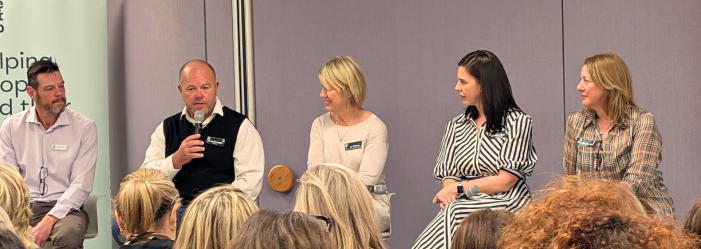
If you weren't in the room at PwC's Barangaroo offices last week, here's what you missed. We brought together senior safety and HR leaders from
Westpac,
PwC, and
Team Global Express to talk through one of the more pressing challenges in Australian workplaces right now: how do you manage psychosocial risk without sacrificing performance? The conversation was honest, practical, and at times surprising.
Psychosocial risk is already costing you money — you just can't see it yet
Dave Burroughs, Chief Mental Health Officer at Westpac and Principal Psychologist at Australian Psychological Services, opened with an APS case study that framed the conversation. A large leadership team was overworked and losing productivity. The typical response team-building day. There was no business case for extra resources.
Instead, Dave's team applied a psychosocial job design lens. They found many hours of wasted work per week, driven by role confusion. The annual cost to the business was in the tens of millions of dollars. No psych injury claims had been filed, but the point isn't just the number. It's that this kind of harm is invisible to standard safety metrics. If you're only looking at claims data, you're looking at the wrong thing.
Who owns psychosocial safety?
Honestly, this is still being worked out in most organisations. The regulation sits within WHS. The controls largely sit within HR. Neither function can manage it alone. Jo Cairns, Chief People Officer at Team Global Express, described how TGE's People & Culture team co-designs everything with their safety team. Both are jointly accountable to governance committees. Jo put it plainly: "If people only worry about their own silo, the human-centred approach gets missed."
Danielle Odd, Director of Wellbeing, Health and Safety at PwC, sits within the same leadership team as the culture and talent function. That proximity shapes how psychosocial risk gets treated across the business.
Evidence-based job design: the gap between theory and practice
When the panel turned to evidence-based job design, Danielle was candid: "I don't think we have the skill yet." Most organisations know they where they need to get to, but very few have.
Dave added a warning worth passing on. Since the regulations came in, the market has filled with self-declared psychosocial risk experts. Many diagnostic tools lack independent academic validation. Some rely on occupational hygiene models that simply aren't fit for purpose in this space. And any provider telling you to focus on your top three risks is giving you an incomplete picture. Psychosocial hazards interact. You need to look at the full picture.
"High performance" is doing a lot of heavy lifting
This one came up more than once. At TGE, a talent review surfaced a leader who was rating people as top performers based on hours worked and weekend availability. That got challenged.
Dave drew the comparison to elite athletes: rest and recovery aren't optional, they're structural. Margherita Maini, Managing Director of Culture, Leadership and Talent at PwC, was direct: "High performance is a label we apply to working long hours. We need to break down that ego."
If your organisation uses "high performance" as a cultural identity, it's worth asking what that phrase is actually covering for.
The bottom line
Psychosocial risk is real, it's measurable, and it's showing up in your business whether or not it shows up in your claims data. The organisations making progress are the ones treating job design, role clarity, and HR-safety collaboration as genuine risk controls, not just good practice.
Want to talk through where your organisation sits? Get in touch with The Safe Step.