The value of a diverse room
Page Published Date:
November 22, 2026

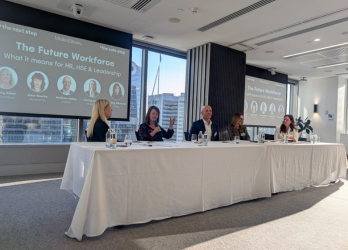
In October, members of our Executive HSE Forum met at Laing O’Rourke’s North Sydney office. In one morning, the conversation moved from board-level safety governance to AI and proximity detection on construction sites, and then to the future capability of the profession itself.
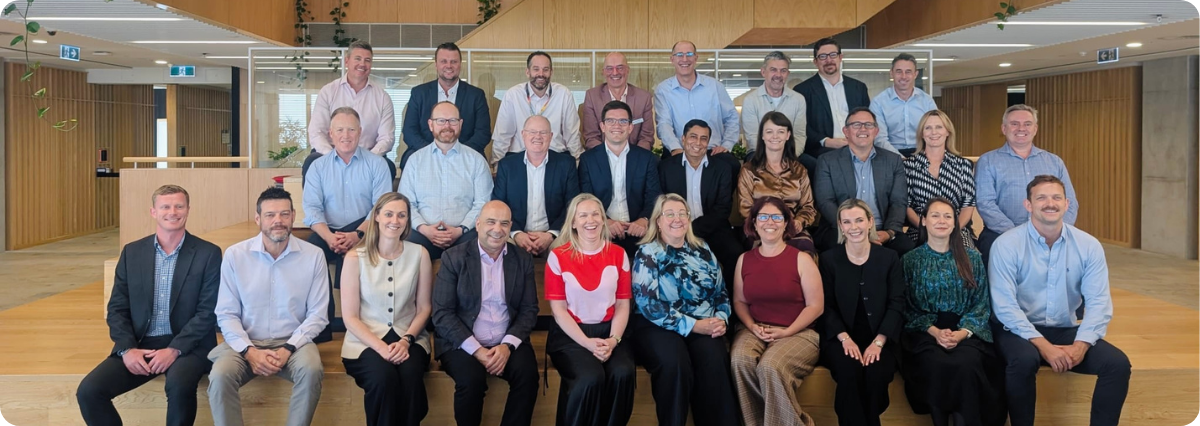
The breadth of that conversation reinforced something I have seen repeatedly over many years: some of the most valuable leadership insights come from people working in environments very different from your own.
Different sectors, shared challenges
The Forum brings together senior health and safety leaders from banking, construction, property, investment, major hazard facilities and other complex operating environments.
On the surface, their organisations have very different risk profiles. Yet when the conversation gets beneath the industry-specific detail, many of their leadership challenges are remarkably similar.
During the technology session, Joel Fraser from Laing O’Rourke discussed the practical realities of managing proximity between people and mobile plant. The conversation quickly expanded beyond construction. Another Forum member described a comparable challenge in a large multi-tenant environment, where equipment may be owned and operated by different organisations working under separate systems and accountabilities.
Different settings. The same underlying question: how do you exercise meaningful leadership and control when responsibility is shared?
This is where a cross-sector forum becomes valuable. One person brings a live problem and leaders from several different industries test it from perspectives the owner may not have considered.
Experience should challenge our thinking
As leaders gain experience, the risk is not that we lack information. It is that we spend too much time with people who see the world in much the same way.
The most valuable conversations are not always those that confirm our thinking. They are the ones that make us reconsider an assumption, look at a problem through a different lens or recognise that another sector has already addressed a challenge we are only beginning to encounter.
However, diversity of perspective alone is not enough. The conversation must also remain at the right level.
Forum members have spoken about industry groups that gradually became too operational. As that happened, senior leaders disengaged. The value of the Executive HSE Forum comes from bringing together a broad range of perspectives while keeping the discussion focused on strategic leadership, governance and enterprise-level challenges.
That combination encourages experienced leaders to think differently rather than simply exchange familiar practices.
Conversation should lead to contribution
A group of Forum members is exploring how its collective experience could contribute to practical guidance on health and safety governance.
The early work has reinforced that collaboration needs more than goodwill. It needs a real problem to solve, a shared purpose and clarity about the contribution required from each person.
When those conditions are present, a conversation can become something more valuable: a collective contribution that benefits the wider profession.
Beyond technical expertise
One of the most important questions raised during the Forum was also one of the simplest:
“Who is ready to step into our roles?”
Health and safety professionals now have access to strong technical training, qualifications and professional networks. What emerging leaders may see less frequently is how senior executives work through complex strategic questions:
- How is health and safety represented in the boardroom?
- How should an organisation assess new technology?
- How do leaders balance immediate operational pressures with longer-term cultural and capability needs?
Developing the next generation requires more than technical instruction. Emerging leaders need exposure to these conversations and the opportunity to contribute to real governance, technology and organisational improvement work.
This is not unique to the HSE profession. Every leadership team should be asking whether its emerging talent is being prepared to manage today’s tasks or to navigate tomorrow’s complexity.
Creating better leadership conversations
You do not need a formal forum to bring these benefits into your organisation.
- Look beyond your own sector and function - Some of the most useful challenges to your thinking will come from people who do not share your industry assumptions.
- Protect the strategic level of the conversation - Operational detail matters, but senior leaders also need space to consider the broader issues of governance, organisational capability and future risk.
- Bring emerging leaders into the room - Give them meaningful exposure to strategic work so they can see how complex decisions are framed, tested and made.
After many years of participating in these conversations, one thing has become increasingly clear to me: the quality of our thinking improves when experienced people from different backgrounds are willing to work openly on a shared problem.